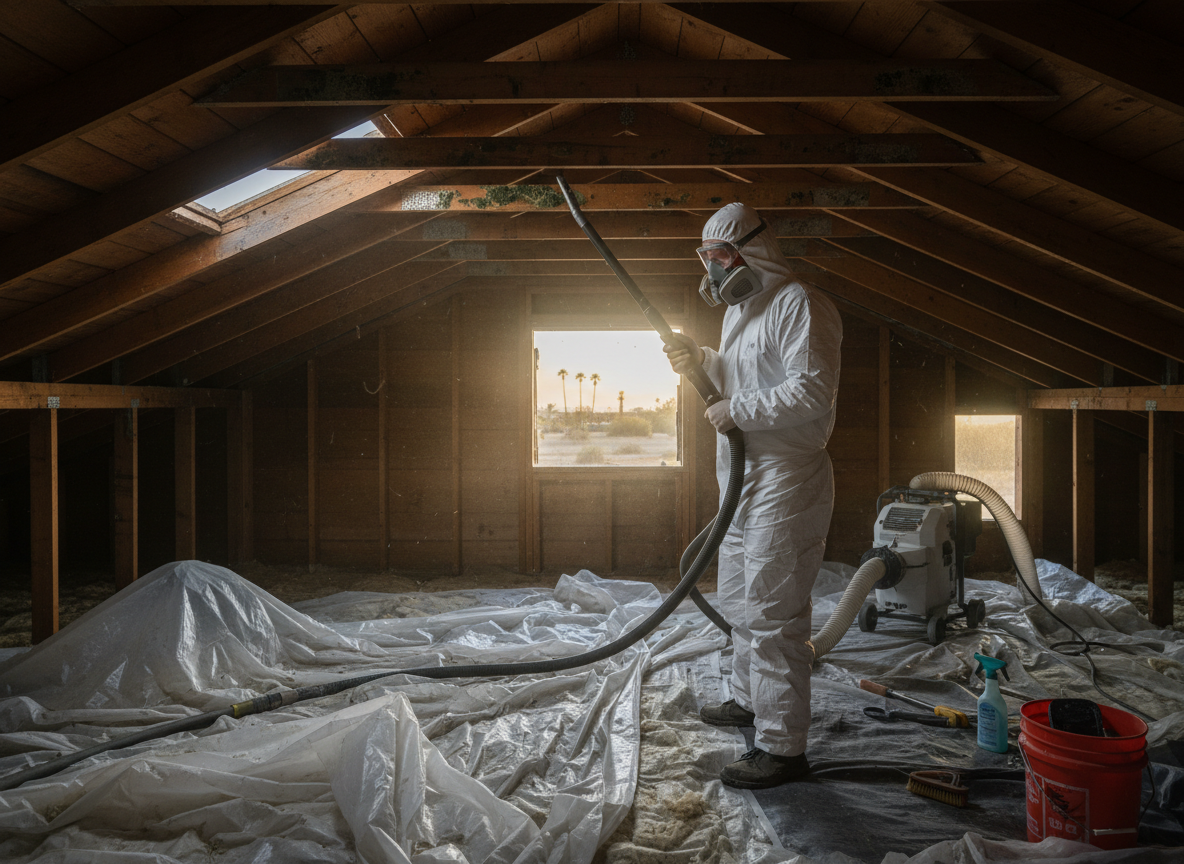
Attics in North Palm Springs homes often develop mold when hot desert summers drive extreme roof deck temperatures that push condensation onto cooler ductwork and insulation. Mild winters reduce natural drying cycles, allowing spores to colonize fiberglass batts and roof sheathing after even small roof penetrations or bathroom exhaust leaks. Technicians must account for the age of local housing stock, where older single-story ranch homes near Indian Avenue frequently lack ridge venting and have R-19 insulation that traps humidity against plywood. Proper remediation requires negative air machines rated for high heat plus post-removal verification that surfaces stay below 60 percent relative humidity once the attic is sealed again.
Removal work here differs from coastal jobs because daytime attic temps above 130 degrees force crews to stage containment early in the morning or use additional exhaust to keep workers safe. Mold on OSB or particleboard sheathing common in 1970s-1990s builds near Desert Hot Springs often requires full panel replacement rather than surface treatment alone. Homeowners sometimes attempt bleach cleaning that leaves roots intact; the real fix is cutting out affected material, HEPA vacuuming adjacent cavities, and installing new baffles to restore airflow before reinsulating. Riverside County building practices emphasize proper vent ratios that many retrofitted homes still miss.
After physical removal, drying protocols must address the rapid temperature swings between day and night that can reintroduce moisture if dehumidifiers are removed too soon. Crews place data loggers at multiple attic elevations to confirm moisture content in remaining lumber drops below 12 percent before closing access points. In neighborhoods around North Palm Springs, shared rooflines between adjacent properties mean containment curtains often extend across multiple units to prevent cross-contamination during removal.
Seasonal Timing Considerations
Work performed during peak summer requires shorter on-site shifts and extra hydration protocols for technicians. Winter jobs allow longer continuous runs but must include extra drying time to offset cooler evening air that slows evaporation from wood members.
Technician insight
In North Palm Springs, the thing that catches most people out with attic mold remediation is how the 130-degree attic temperatures in summer turn even a small AC duct sweat into widespread growth across the entire insulation layer before anyone notices. Homeowners in the older homes along Indian Avenue often try to handle it themselves in winter when it feels cooler up there, but they miss the fact that the mold roots are already baked into the sheathing from the previous July.
Roof vent leak near Indian Avenue
A North Palm Springs homeowner noticed musty odors after a rare winter rain. Inspection revealed mold spreading from a damaged roof vent across fiberglass batts and into the OSB decking. Crews contained the space, removed the wet insulation and affected sheathing panels, dried the remaining structure, and restored airflow with new baffles before reinsulating.
How it works
- 1
Initial Assessment
Technicians enter the attic from the North Palm Springs address to map visible growth, check insulation saturation, and trace moisture paths back to roof leaks or HVAC condensation.
- 2
Containment Setup
Plastic barriers and negative air machines isolate the affected section while protecting living spaces below from falling debris during removal.
- 3
Material Removal
Moldy insulation, sheathing sections, and affected wood are cut out and bagged for disposal, followed by HEPA vacuuming of remaining surfaces.
- 4
Drying and Verification
Air movers and dehumidifiers run until moisture readings stabilize, then post-remediation samples confirm spore levels match outdoor baselines before reinstalling insulation.
Pricing
Project scope depends on square footage affected, depth of insulation removal, and whether roof deck sections require replacement after summer heat exposure.