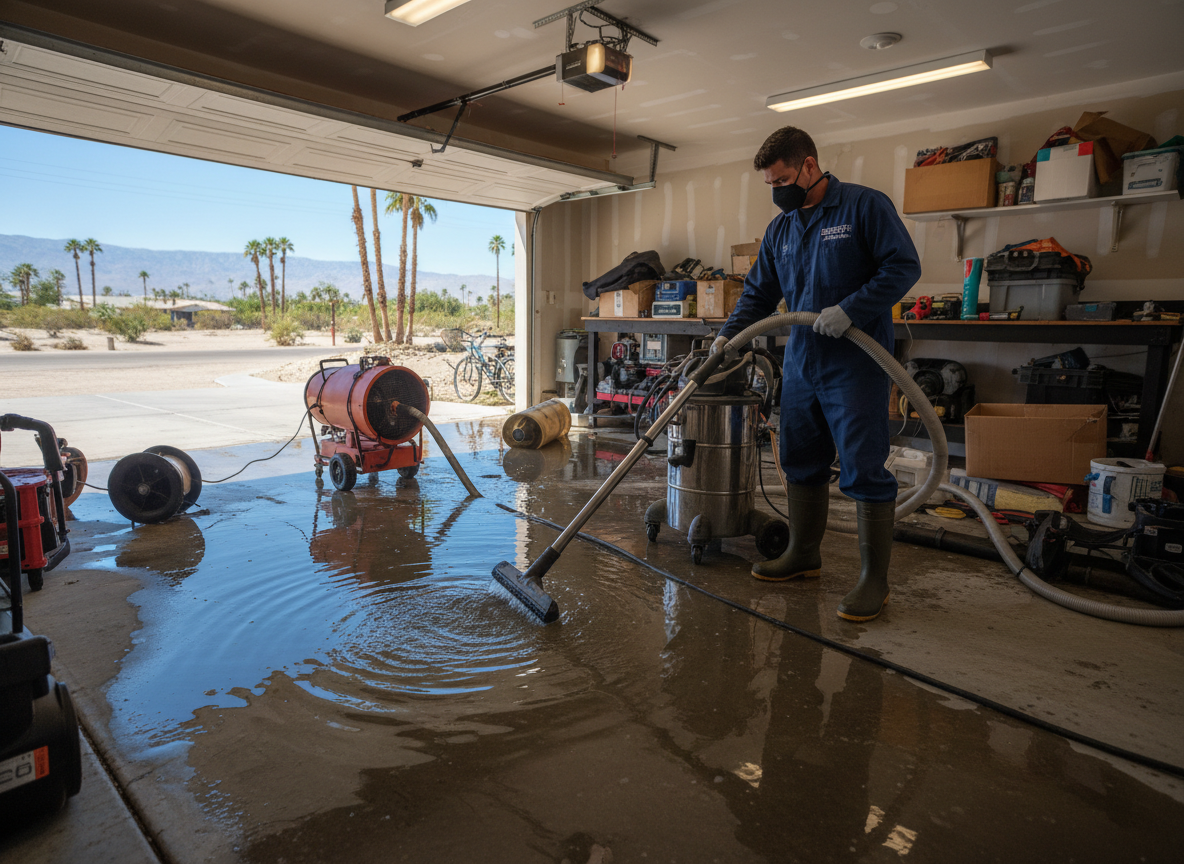
Emergency water removal in North Palm Springs starts with stopping the source and extracting standing water before it migrates into the concrete slabs and stucco walls common in local 1960s-1980s tract homes. Hot summer temperatures above 110 degrees accelerate evaporation on the surface while trapping moisture behind baseboards and in wall cavities, so crews use moisture meters and thermal imaging right away to map hidden saturation along N Indian Ave properties and surrounding neighborhoods.
Flash flooding from monsoon rains or broken supply lines in Desert Hot Springs homes often pushes water under door thresholds and into attached garages. Technicians deploy truck-mounted extractors and air movers immediately because mild winter nights slow drying and raise the risk of microbial growth in the alkaline desert soil that retains salts and minerals. Containment barriers and HEPA air scrubbers protect adjacent rooms while water is pulled from carpet pads, hardwood, and tile grout lines typical of Riverside County construction.
Once bulk water is gone, dehumidifiers run continuously to reach manufacturer drying standards for drywall and insulation. Owners in North Palm Springs often overlook how the region’s low humidity masks remaining moisture until odors appear weeks later, so final verification includes pin readings on multiple wall layers and under cabinets before equipment is removed.
Crew safety protocols address the added heat stress of summer work and the need for proper electrical isolation when water reaches outlets in older wiring. Every job ends with a written drying log that homeowners can review against their insurance adjuster notes.
Technician insight
In North Palm Springs, the thing that catches most people out with Emergency water removal is how fast our 110-degree summers dry the visible surface while leaving saturated drywall and slab edges untouched until the next monsoon season. Older homes along Indian Avenue often have slab plumbing that leaks under tile, and the alkaline soil here holds salts that wick moisture back into walls if extraction stops too early.
Monsoon water under tile in North Palm Springs home
A sudden downpour sent water under the front door of a 1970s ranch house near Desert Hot Springs Road. Extraction revealed saturation extending four feet into the living room slab and under kitchen cabinets. Crews pulled baseboards, placed drying mats on the concrete, and ran dehumidifiers for six days until pin readings stabilized. The homeowner avoided full floor replacement after verification showed no microbial growth.
How it works
- 1
Arrival and Source Control
Technician arrives within the hour, locates the leak or flood entry point, and shuts off water if safe to do so.
- 2
Standing Water Extraction
Truck-mounted pumps and wands remove bulk water from floors, carpets, and low-lying areas before it spreads further.
- 3
Moisture Mapping
Infrared cameras and meters identify hidden moisture in walls, under tile, and inside cabinets common in local homes.
- 4
Drying and Monitoring
Air movers and dehumidifiers are placed; daily readings track progress until materials return to dry standards.
- 5
Final Verification
Equipment is removed only after documented moisture levels meet restoration guidelines and a drying report is provided.
Pricing
Pricing depends on water volume, affected square footage, and drying duration; upfront assessment provided on site.