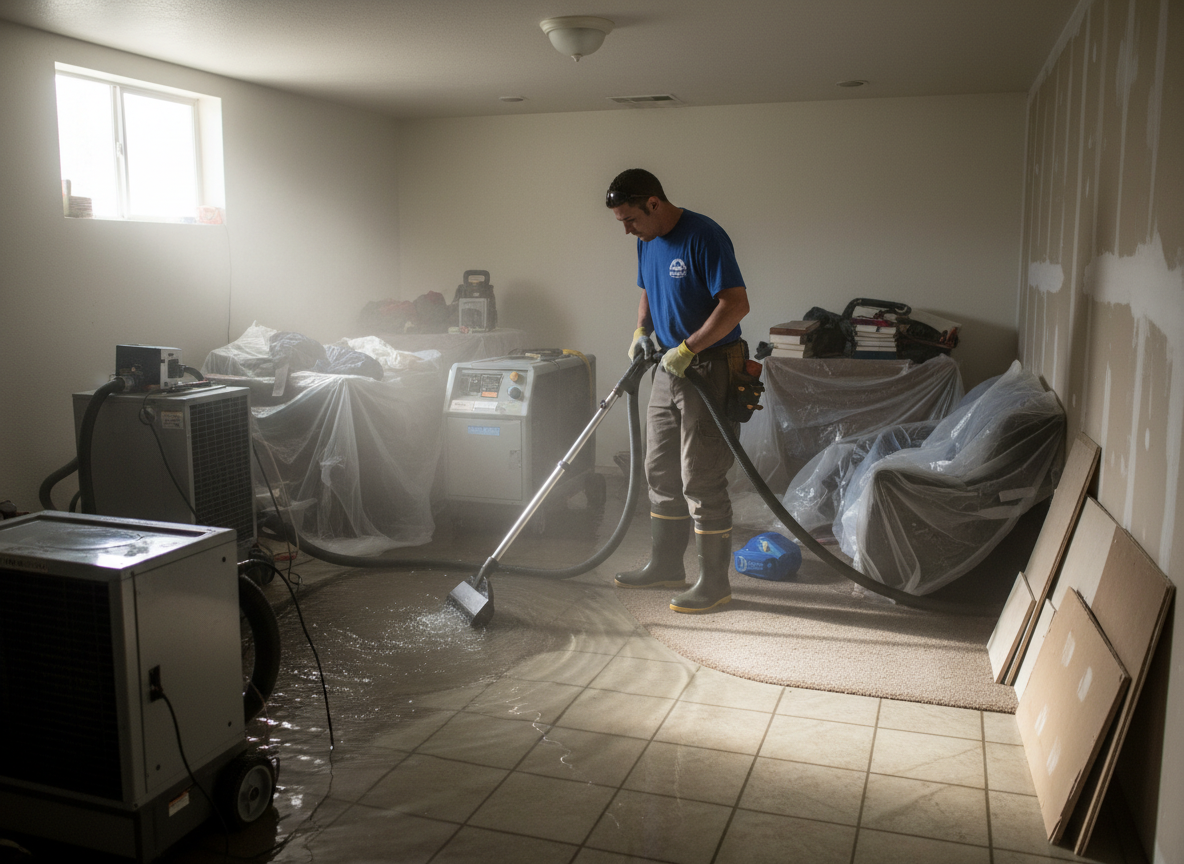
North Palm Springs sits in a hot desert climate where rare but intense summer monsoon rains send water across compacted desert soil and into older slab-on-grade homes common along N Indian Ave and nearby streets. These homes, often built from the 1950s through 1970s, use concrete slabs with minimal perimeter grading, so even modest runoff pools against stucco walls and travels under tile or vinyl flooring. Mitigation here requires immediate water extraction followed by targeted drying beneath finished surfaces rather than surface-only cleanup.
Edge cases appear when water migrates into the joint between the slab and stem wall or saturates the sand layer beneath tile. Standard moisture meters miss this until secondary damage shows as cupping or efflorescence weeks later. Technicians must use penetrating probes and infrared imaging, then create negative-pressure drying chambers while protecting the home’s single-pane windows and uninsulated walls from rapid temperature swings that can crack drying materials.
Riverside County building practices in this zone emphasize vapor barriers that many older North Palm Springs properties lack. When mitigation crews open walls or flooring, they document existing conditions to avoid code conflicts during later repairs. Mild winters keep the ground from freezing but allow slow evaporation that hides ongoing moisture, so follow-up visits after the initial dry-out are essential to confirm readings stay below 12 percent moisture content.
Technician insight
In North Palm Springs, the thing that catches most people out with water damage mitigation is monsoon water that travels under the slab edge along N Indian Ave and sits in the sand layer beneath tile for weeks. Homeowners often stop at surface drying, but the desert soil holds moisture until we pull it with directed airflow, and mild winters let it linger without obvious signs.
Monsoon Runoff Under Slab
Runoff from a summer storm entered a North Palm Springs home through the garage slab joint. Inspection showed elevated moisture in the sand bed under kitchen tile. Extraction and directed drying removed the trapped water before mold formed, restoring dry readings within four days.
How it works
- 1
On-Site Assessment
Technicians arrive from the North Palm Springs base and map water migration using meters and imaging across slab edges and wall cavities.
- 2
Water Extraction
Standing water and saturated sand layers are removed with truck-mounted equipment suited to desert soil conditions.
- 3
Targeted Drying
Negative air machines and dehumidifiers dry hidden areas under flooring while monitoring daily moisture levels.
- 4
Final Verification
Post-drying readings confirm moisture content meets industry standards before surfaces are closed.
Pricing
Upfront quotes provided after inspection; final cost depends on water volume, depth of migration under slabs, and drying duration required.