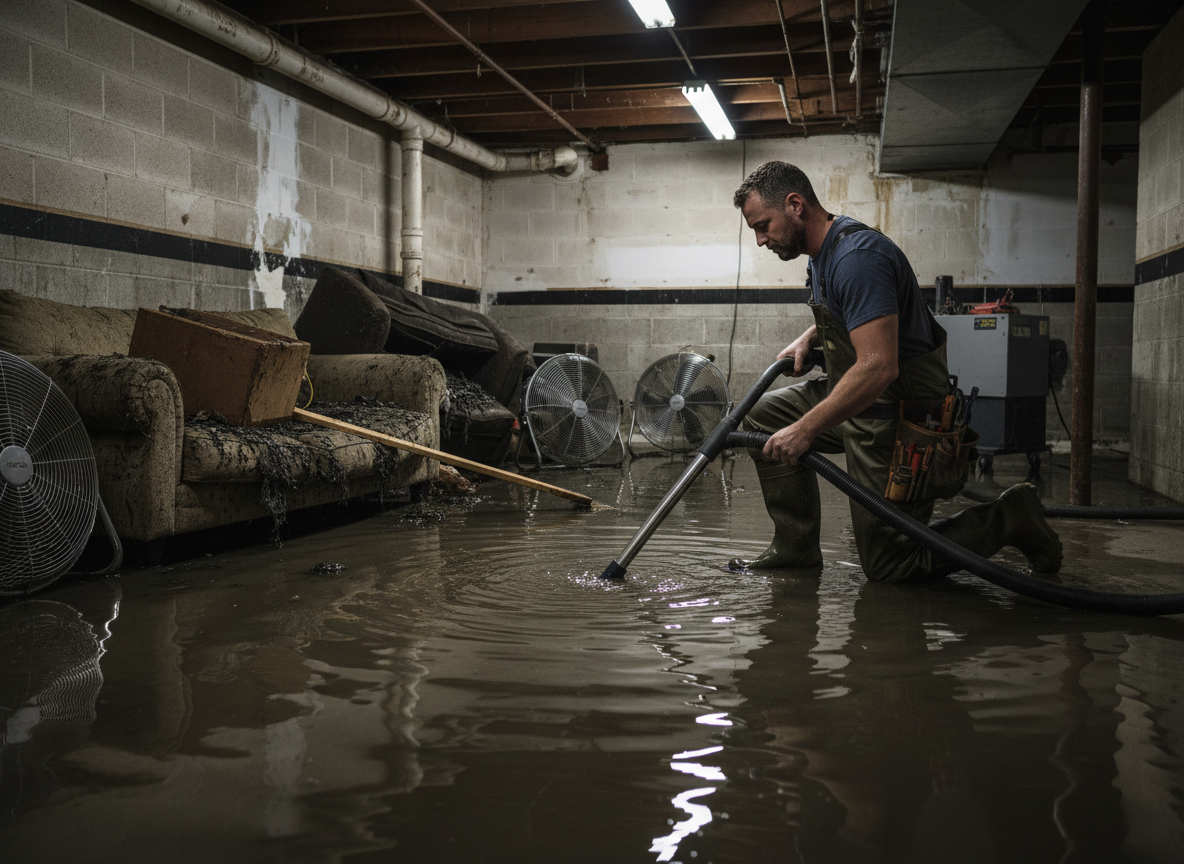
North Palm Springs sits in Riverside County where the hot desert climate brings sudden monsoon downpours that can overwhelm older homes near Indian Avenue. Basements in these properties often feature concrete block walls and slab-on-grade transitions that allow water to wick upward from the compacted desert soil. When flooding occurs from burst supply lines or poor grading, crews must account for the low humidity that masks ongoing moisture behind drywall while accelerating mold growth once temperatures rise again.
Extraction begins with submersible pumps rated for sandy sediment common in the area, followed by air movers and dehumidifiers sized for the tight, poorly ventilated basements found in 1960s and 1970s tract homes around Desert Hot Springs Road. Technicians check for hidden saturation in HVAC ducts and electrical boxes because the mild winters keep systems running year-round and spread moisture quickly. Edge cases include water migrating under stucco exterior walls or into attached garages where the slope directs flow inward during rare heavy events.
After removal, moisture mapping with thermal imaging identifies pockets that standard fans miss in the dense caliche soil layers beneath many North Palm Springs foundations. Homeowners must remove baseboards and sometimes sections of flooring early because trapped water under vinyl or carpet padding leads to rapid bacterial growth even in dry air. Final clearance testing confirms levels return to ambient desert conditions before any reconstruction begins.
Technician insight
In North Palm Springs, the thing that catches most people out with Basement flood cleanup is how the hard desert soil and flat lots around N Indian Ave let water sit against foundations for days after a storm, then wick up into drywall even when the air feels bone-dry.
Monsoon runoff into 1970s basement
Heavy rain sent water under a garage slab and into the basement of a home off Indian Avenue. Extraction revealed saturated carpet padding and moisture behind baseboards that had wicked upward from the compacted soil. Crews removed standing water, ran drying equipment for four days, and confirmed levels matched the surrounding dry climate before the homeowner replaced flooring.
How it works
- 1
Initial Assessment
Technicians arrive 24/7 and document water depth, affected materials, and entry points specific to desert-climate homes.
- 2
Water Extraction
Pumps and wands remove standing water while separating sediment typical of local soil conditions.
- 3
Drying And Monitoring
Industrial equipment dries structural elements with daily moisture readings until levels match surrounding dry climate.
- 4
Sanitization And Clearance
Antimicrobial application and testing ensure the space meets pre-loss conditions before rebuild.
Pricing
Upfront quotes provided after on-site inspection; cost varies with water volume, affected square footage, and required equipment runtime.