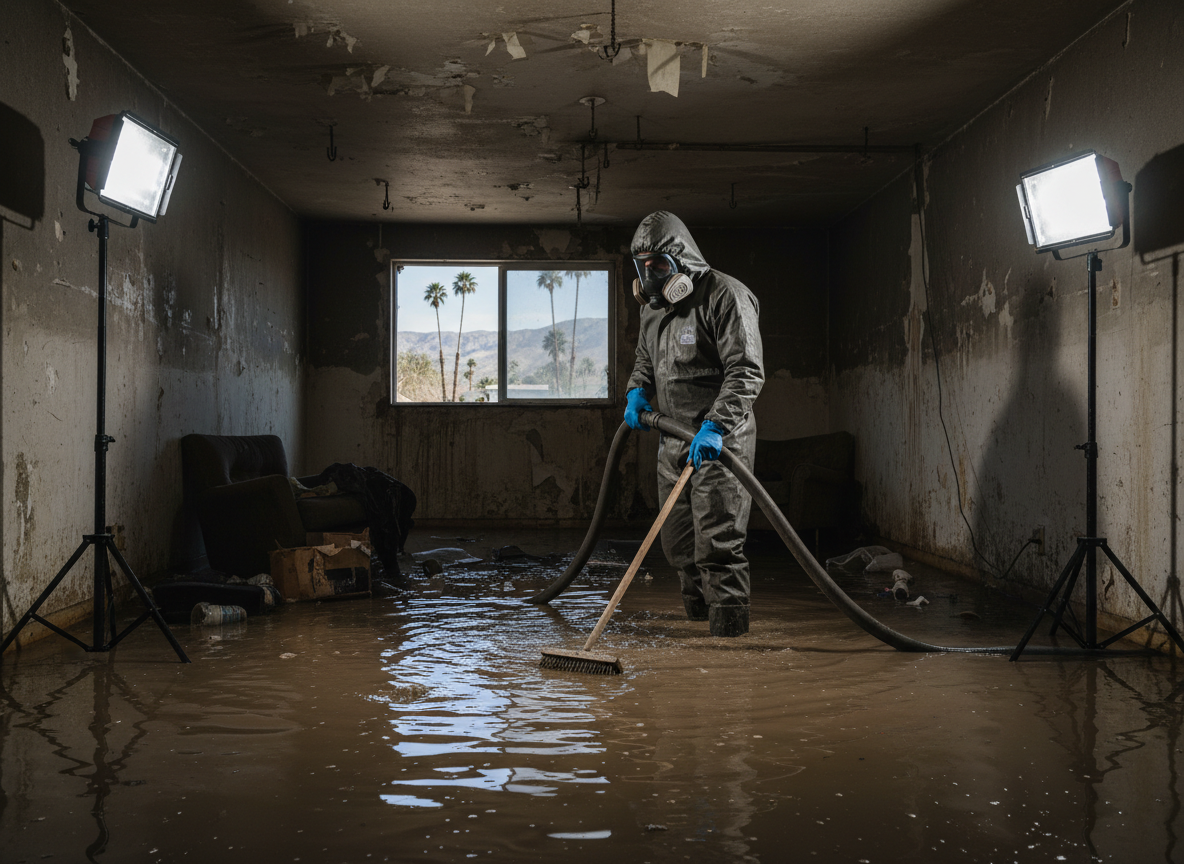
Sewage backups in North Palm Springs often stem from older cast-iron lines common in homes built before the 1980s along Indian Avenue and nearby streets. The hot desert climate accelerates bacterial growth on surfaces once water is introduced, while mild winters allow slow leaks to go unnoticed until they reach living spaces. Proper containment requires negative air machines and EPA-registered disinfectants to meet Riverside County health guidelines, especially when waste migrates into sandy soil common in the area.
Technicians must address both visible contamination and hidden moisture in drywall, subfloors, and cabinetry. Desert heat can dry surface water quickly, masking saturation that later fuels mold in Palm Springs and Desert Hot Springs border properties. Full removal of affected porous materials is often required rather than simple cleaning, and all waste must be transported to permitted Riverside County disposal sites to avoid cross-contamination during transport.
Homeowners in North Palm Springs frequently discover issues after heavy seasonal rains overwhelm shared sewer lines near the 92258 zip code. Immediate isolation of HVAC systems prevents odor spread through ductwork, a common pathway in single-story desert homes. Post-cleanup verification includes moisture readings below 15 percent and ATP swab testing to confirm sanitation levels before reconstruction begins.
Technician insight
In North Palm Springs, the thing that catches most people out with sewage cleanup is how fast the arid desert air pulls surface moisture from wood and drywall while leaving saturated cavities untouched, especially in homes near Indian Avenue where older slab foundations trap waste against the soil.
Bathroom Backup After Line Failure
A North Palm Springs residence near Desert Hot Springs Road experienced a sudden sewer line failure that sent waste into the hallway. Assessment showed saturation under the tile and into the subfloor. Extraction, full material removal, and targeted disinfection were completed before the desert heat could spread odors through the single-story layout.
How it works
- 1
Initial Assessment
Technicians arrive within hours, map the contamination zone, and identify affected materials while wearing full PPE.
- 2
Containment and Extraction
Barriers and negative air are set up, followed by removal of standing waste and heavily soiled materials.
- 3
Cleaning and Disinfection
All surfaces receive antimicrobial treatment and HEPA vacuuming to eliminate pathogens.
- 4
Drying and Verification
Industrial drying equipment runs until moisture levels meet standards, then clearance testing is performed.
Pricing
Costs depend on square footage affected, depth of penetration into flooring, and whether HVAC systems require decontamination.