2026-10-15 ·
Preparing Your Property for Seasonal Storm Water Intrusion Near Highway 111
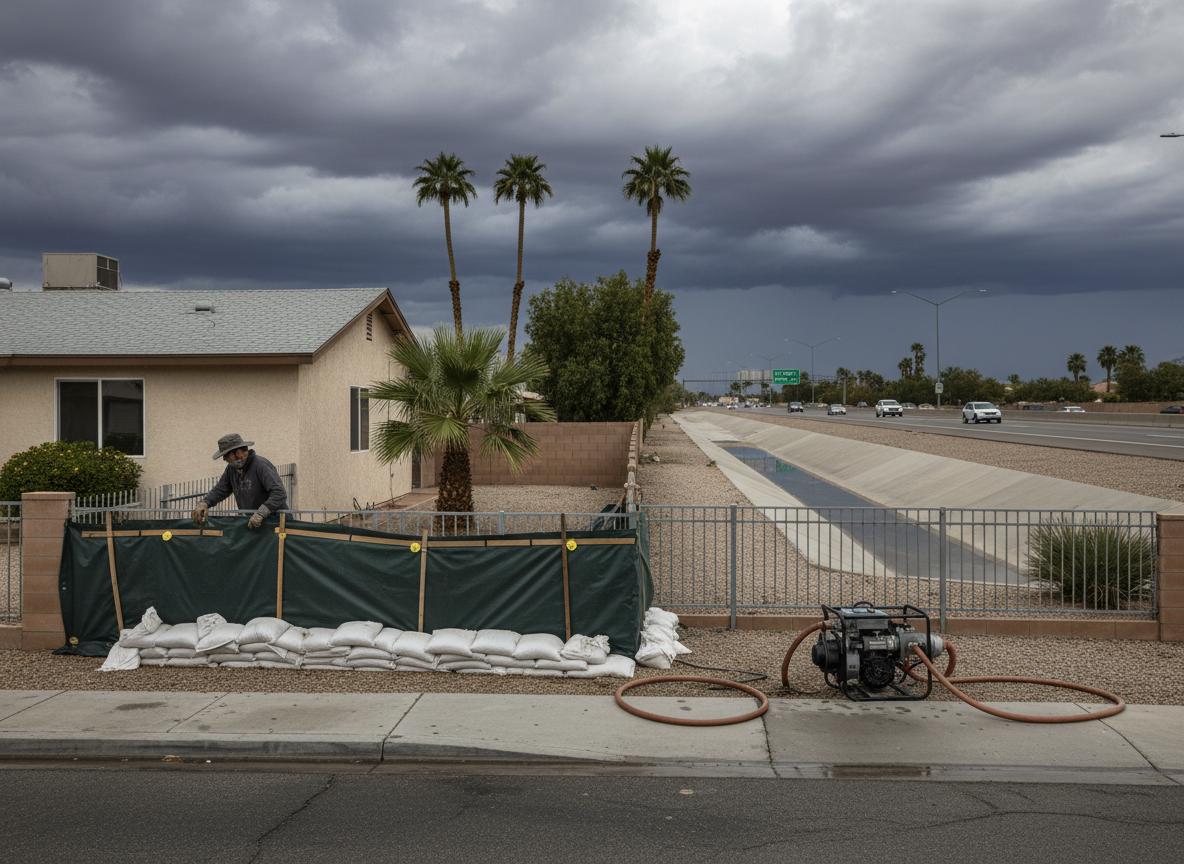
Properties near Highway 111 in North Palm Springs face sudden water intrusion when winter storms drop 1–2 inches of rain on compacted desert soil that absorbs little. Start by walking the roofline and perimeter to identify low spots, clogged channels, and cracked stucco that let water travel inward within the first hour of heavy rain.
Inspecting Roofs and Gutters for Desert Storm Loads
Flat and low-slope roofs common on North Palm Springs homes built before 1990 collect debris quickly during the long dry season. Check for ponding areas larger than 2 square feet and replace missing granules on asphalt shingles before the first storm. Clean gutters and downspouts so water exits at least 5 feet from the foundation; blocked lines on east-facing slopes near Highway 111 often back up and push water under fascia boards. In Palm Springs neighborhoods just south, similar roofs have shown interior leaks within 30 minutes when scuppers are clogged with palm fronds. Schedule this inspection in October when temperatures drop below 90 degrees and before any forecast calls for measurable rain.
Improving Drainage on Compacted Desert Lots
Yards in North Palm Springs and nearby Desert Hot Springs sit on sandy loam that hardens into a crust after months without rain. Regrade soil so it slopes 6 inches over the first 10 feet away from the house, and add French drains along the west side where Highway 111 runoff concentrates during afternoon thunderstorms. Install splash blocks or extend downspouts with rigid pipe to carry water past the drip line of mature palms and oleanders. Properties along the highway corridor often see sheet flow from the road shoulder; a 4-inch berm of decomposed granite can redirect that flow before it reaches stucco walls. These changes reduce standing water duration from hours to minutes once the storm passes.
Sealing Foundations and Wall Penetrations
Many single-story homes near Highway 111 have concrete block foundations with hairline cracks that widen after 15–20 years of thermal cycling. Apply elastomeric sealant to all penetrations around utility lines and hose bibs, paying special attention to the north elevation that faces prevailing winter winds. Check window and door thresholds for gaps larger than 1/8 inch and add metal flashing where stucco meets the slab. In Riverside County’s mild winters, temperatures rarely drop below 40 degrees, yet even brief ponding against the foundation can migrate moisture into drywall within 48 hours. After sealing, test by running a hose at the base for 10 minutes and watching for interior dampness.
Monitoring and Quick Response During Storms
Keep a battery-powered wet/dry vac and shop towels ready once forecasts show 0.5 inches or more. Walk the interior perimeter every 30 minutes during active rain, checking baseboards in bathrooms and laundry rooms closest to the street. If water appears, shut off the main valve and document the source before extraction begins. Residents in North Palm Springs can reach the team at 19997 N Indian Ave for emergency water removal available 24/7. For longer-term planning, review what water damage restoration typically costs in North Palm Springs and schedule water damage mitigation before the next seasonal event to limit hidden moisture behind cabinets and under flooring.